J Transcat Intervent.2018;26(1-2):A0003.
Geographic variations of percutaneous coronary interventions in Brazil
DOI: 10.31160/JOTCI2018;26(1)A0003
ABSTRACT
Background:
Currently, percutaneous coronary intervention is the most widely used revascularization method to treat coronary artery disease. The objective of this study was to analyze the characteristics and results of percutaneous coronary interventions performed in different Brazilian regions over the last decade.
Methods:
A retrospective study including procedures recorded in the Central Nacional de Intervenções Cardiovasculares (CENIC) registry, between 2006 and 2016, representing the five regions of the country.
Results:
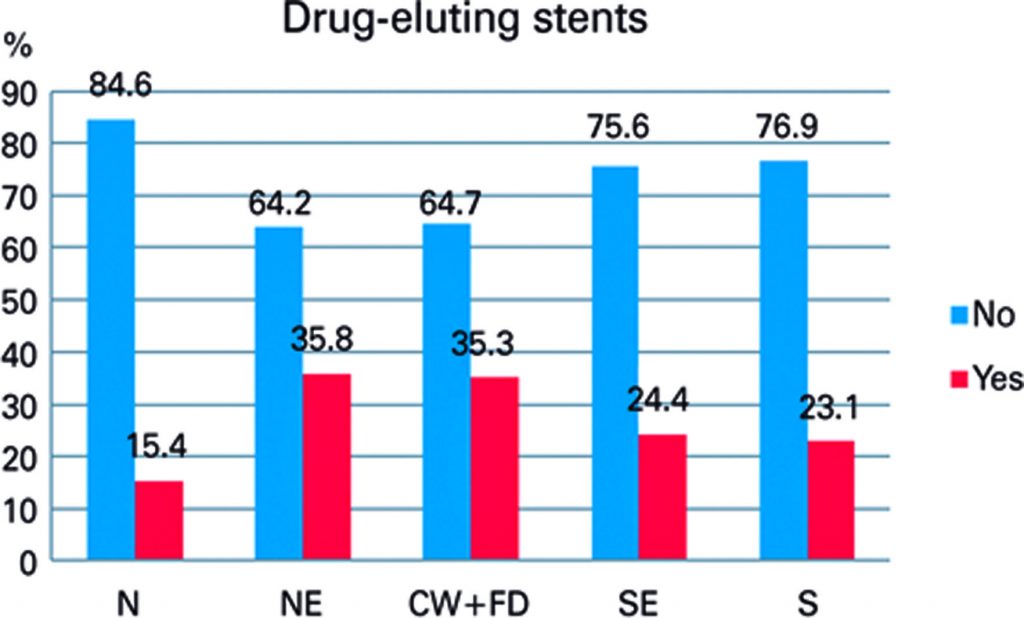
A total of 176,780 patients who underwent 191,127 procedures, with 248,659 stents placed, were analyzed. Most of the patients were male (66.1%), and mean age was 62.9 years. A total of 23.9% patients were diabetic and 23.1% were smokers. The success rate of the procedure was high (97.3%), and stents were used in 96.1% of cases. Drug-eluting stents accounted for 26.3% of devices placed, and their largest use was in the Northeastern and Central-Western Regions. In-hospital major adverse cardiac events were reported in 1.1% of patients.
Conclusions:
According to data from the CENIC registry, percutaneous coronary interventions performed in Brazil included increasingly more complex procedures, with high success rates, with a prevalence of major adverse cardiac events comparable to the international registries. However, these advances were not uniform among the five Brazilian regions.
Keywords: Angioplasty; Coronary artery disease; Registries; Stents
548