J Transcat Intervent.2018;26:eA0018.
Analysis of patients submitted to percutaneous coronary intervention via radial artery access. The SAFIRA Registry database
DOI: 10.31160/JOTCI2018;26(1)A0018
ABSTRACT
Background
The choice of the radial access for performing percutaneous coronary interventions has grown due to evidence of the greater benefits of the technique, such as reduced vascular complications, lower bleeding rates, early ambulation, shorter hospital stay and lower costs. The present study aimed to analyze patients submitted to percutaneous coronary intervention using the radial access in comparison to the femoral artery access in elective cases or in acute coronary syndromes.
Methods
An observational, single center study based on the SAFIRA registry database, which includes patients undergoing percutaneous coronary intervention with drug-eluting stents. The primary endpoint was the incidence of cardiovascular mortality in a 3-year follow-up.
Results
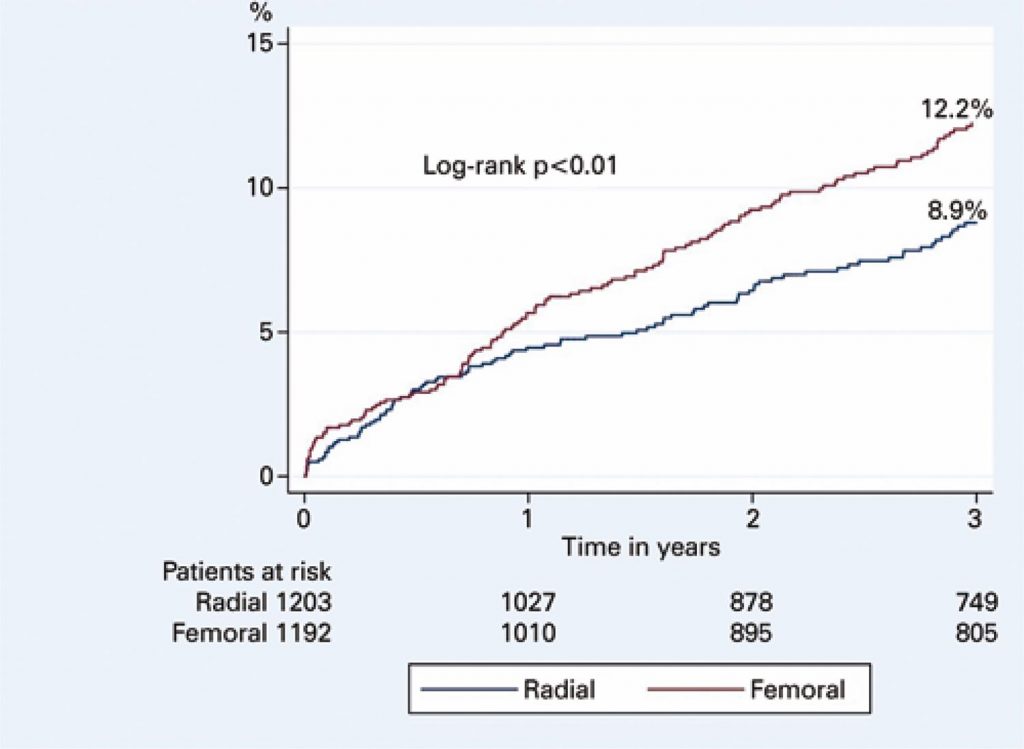
A total of 2,453 patients were included, 1,237 of which allocated to the radial group and 1,216 to the femoral group. The prevalence of vascular complications was higher in the femoral group (OR: 15.4; p=0.008), as was the contrast volume used (OR: 1.001; p=0.02). The primary endpoint of cardiovascular mortality in the femoral group was 4.5% vs. 2.3% in the radial group (RR: 1.77; p<0.01). All-cause mortality rates (10.2% vs. 7.4%, RR: 1.37; p=0.03) and major adverse cardiac event rates (12.2% vs. 8.9%, RR: 1; 36; p<0.01) were also higher in the femoral group. When adjusted for relevant clinical variables, the femoral access remained as an independent predictor of cardiovascular mortality.
Conclusions
Radial access was effective in reducing mortality, major adverse cardiac events and vascular complications among patients undergoing percutaneous coronary intervention.
413