J Transcat Intervent.2019;27:eA0002.
Time profile of percutaneous coronary interventions in calcified lesions
DOI: 10.31160/JOTCI2019;27A0002
ABSTRACT
Background:
Calcified coronary lesions are a complex angiographic scenario in the practice of percutaneous coronary intervention. The objective of this article was to present the temporal trends of the clinical and angiographic profile, and in-hospital outcomes of patients with calcified lesions.
Methods:
A retrospective study of 35,897 patients with coronary calcification included in the Central Nacional de Intervenções Cardiovasculares (CENIC) registry, from January 2006 to January 2016. The temporal trends of clinical, angiographic and procedural variables, as well as severe in-hospital clinical events were assessed.
Results:
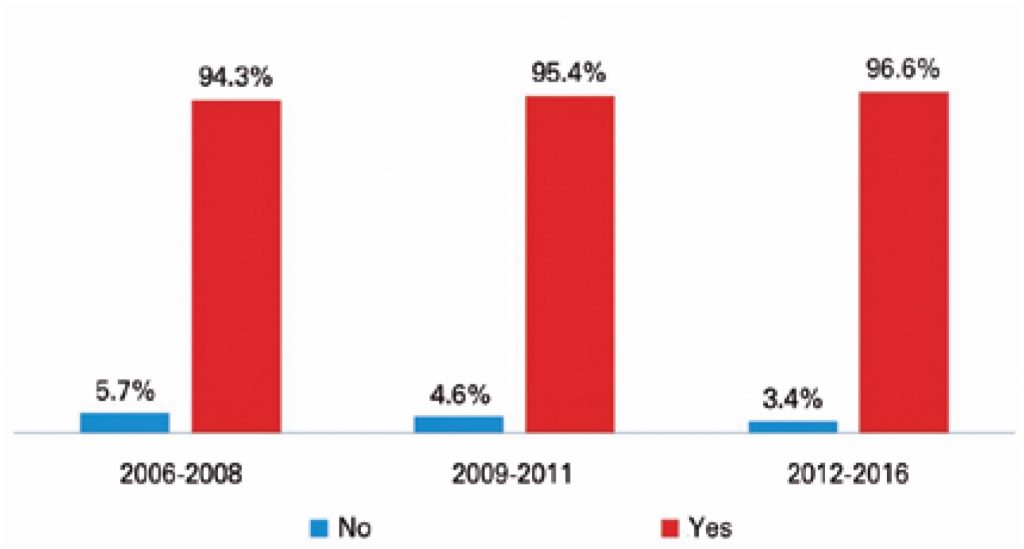
There was an increase in mean age in this period, with a drop in the number of smokers and of patients with a history of infarction. The use of drug-eluting stents has grown significantly throughout the years. Between 2012 and 2016, the rate of successful procedures was greater than in other periods, accounting for 96.6% of cases. Moreover, there was a temporal reduction in mortality and periprocedural infarction.
Conclusion:
Over one decade, the percutaneous coronary interventions in calcified lesions registered at CENIC presented increasing success rates, rise in the use of drug-eluting stents, and a significant drop in deaths and periprocedural infarction.
461