J Transcat Intervent.2021;29:eA20200038.
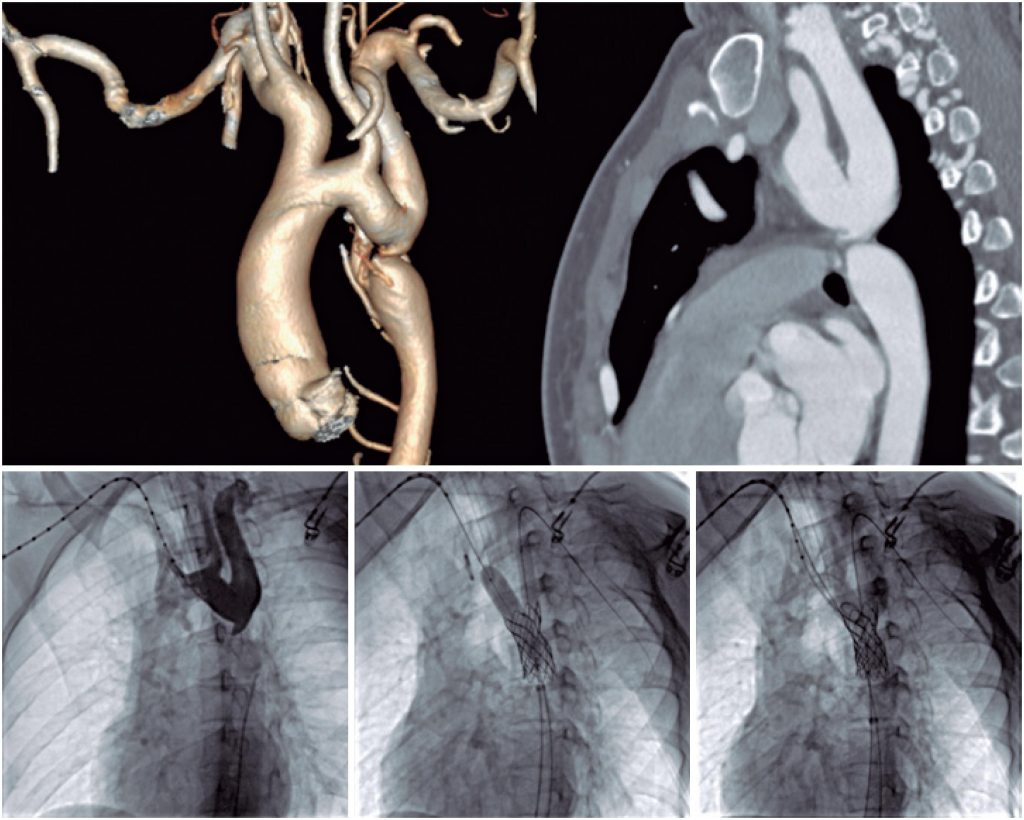
Transcatheter treatment of coarctation of the aorta with aortic lumen atresia and kissing balloon between the aorta and the left subclavian artery
Luis Sérgio Carvalho Luciano
 , Luiz Eduardo Koenig São Thiago
, Luiz Carlos Giuliano
, Luiz Eduardo Koenig São Thiago
, Luiz Carlos Giuliano
DOI: 10.31160/JOTCI202129A20200038
Coarctation of the aorta (CoA) accounts for 5% to 7% of all congenital heart diseases, with an estimated incidence of approximately three cases per 10 thousand live births. CoA treatment is indicated when the coarctation gradient is equal to or greater than 20mmHg., Without treatment, the prognosis is poor, with 75% mortality at 43 years of age. The use of stents for endovascular treatment of CoA was first reported in 1991, expanding the possibilities of transcatheter treatment. Retrospective analyses show a 97.9% rate of success with the use of stents.
Percutaneous treatment of CoA associated with aortic lumen atresia (ALA) is a technical challenge that requires specific materials, and is associated with an increased risk of complications. Farjat Pasos et al. described a technique for traversing the CoA with the assistance of an electrocautery, an accessible option when it is not possible to cross the lesion with 0.014” guides dedicated to the treatment of chronic occlusions using the traditional technique. In these cases, the implantation of covered stents is indicated. The narrowing of the aorta is generally distant from the origin of the left subclavian artery (LSCA), allowing the stent implantation to be performed without major difficulties. When the stenosis is close to the LSCA, the final kissing balloon (FKB) technique or a double guide for stent implantation can be used, ensuring patency of the branch.
[…]
425