J Transcat Intervent.2023;31:eA20220017.
Spontaneous coronary artery dissection, a multifactorial disease: insights from a center experience
Cátia Costa Oliveira
 , Natália Vasconcelos
, Glória Abreu
, Carlos Galvão Braga
, João Costa
, Jorge Marques
, Natália Vasconcelos
, Glória Abreu
, Carlos Galvão Braga
, João Costa
, Jorge Marques
DOI: 10.31160/JOTCI202331A20220017
ABSTRACT
Background
Although it is a poorly known disease, spontaneous coronary artery dissection is an important and frequently underdiagnosed cause of non-atherosclerotic acute coronary syndrome, particularly in women. The objective of this study was to characterize a consecutive sample of patients diagnosed with spontaneous coronary artery dissection with respect to predisposing and precipitating factors; clinical and angiographic presentation; management; occurrence of adverse cardiac events; recurrence; and de novo spontaneous coronary artery dissection.
Methods
Longitudinal, observational, retrospective, single-centre study, including patients diagnosed with spontaneous coronary artery dissection (n=60) admitted between January 2010 and December 2020.
Results
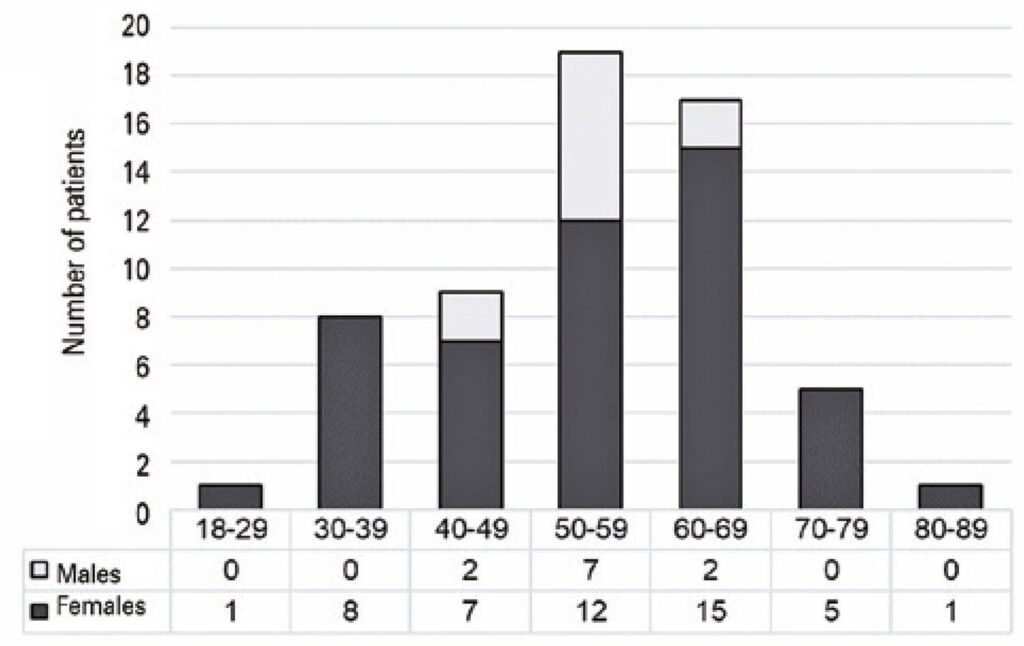
Median age was 55 years, and 83% were women. Most patients (60%) presented without any or just one cardiovascular risk factor. Non-ST-segment elevation acute myocardial infarction accounted for 67% of clinical presentations. The most frequently affected coronary artery was the left anterior descending (47%). Most lesions (77%) appeared on angiography as type 2 spontaneous coronary artery dissection. Conservative management was chosen as the initial approach in most patients (72%). The overall incidence of de novo spontaneous coronary artery dissection was not significantly different among patients initially managed with revascularization as compared to conservative treatment (p=0.953). However, spontaneous coronary artery dissection recurrence occurred in the originally involved vessel in 3 of 15 patients initially managed with revascularization, as compared to only one among 43 patients treated conservatively (p<0.05).
Conclusion
Spontaneous coronary artery dissection occurs more often in young women. Non-ST-segment elevation acute myocardial infarction was the most frequent clinical presentation involving mainly the left anterior descending artery. Revascularization did not protect from recurrence.
311