Rev. Bras. Cardiol. Invasiva.2017;25(1-4):7-11.

Impact of the implementation of hospital work processes on reduced door-to-balloon time
DOI: 0.31160/JOTCI2017;25(1-4)A0003
ABSTRACT
Introduction:
The time interval between symptom onset and coronary artery reperfusion for ST-elevation myocardial infarction is directly related to patient morbidity and mortality. The guidelines stipulate that door-to-balloon time, i.e., the time spent between hospital arrival and percutaneous coronary intervention (PCI), must not exceed 90 minutes. Few hospitals achieve this goal. Thus, the objective of the present study was to assess the efficacy of the implementation of hospital work processes with respect to reducing the door-to-balloon time.
Methods:
Two hundred twenty-two consecutive patients who presented spontaneously at the hospital from February 2008 to July 2013 and who underwent primary PCI were included in the study. During this period, the following strategies were implemented in a hierarchical manner: systematic measurement of door-to-balloon time (Group A), universal communication code (Group B), patient screening (Group C), and emergency cardiologist (Group D).
Results:
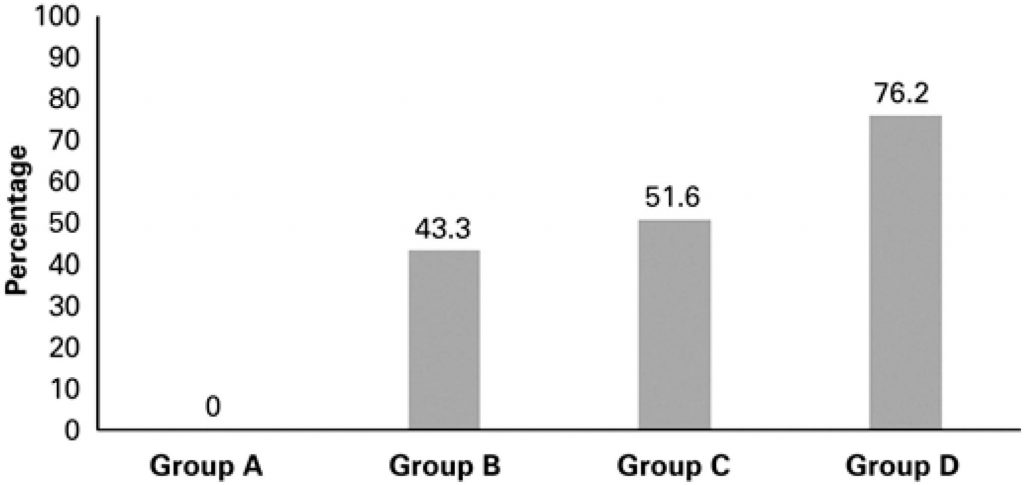
Each implemented strategy entailed a gradual decline in the median door-to-balloon time (Group A: 145 minutes; Group B: 114.5 minutes; Group C: 88 minutes, and Group D: 70 minutes; p < 0.0001) and an increase in the percentage of patients with door-to-balloon times below or equal to 90 minutes (Group A: 0%; Group B: 43.3%; Group C: 51.6%; Group D: 76.2%; p < 0.0001).
Conclusions:
This study demonstrated the efficacy of the implemented strategies for reducing door-to-balloon time, with more than 75% of cases with this time below 90 minutes.
637