J Transcat Intervent.2020;28:eA20200018.
Stent strut ablation with rotational atherectomy device (Rotablator™) for restenosis treatment. Analysis and late follow-up
Débora Freire Ribeiro Rocha
 , Henrique Lima Guimarães
, Flávio Passos Barbosa
, Álvaro de Morais Júnior
, Roosevelt Diniz
, Giulliano Gardenghi
, Henrique Lima Guimarães
, Flávio Passos Barbosa
, Álvaro de Morais Júnior
, Roosevelt Diniz
, Giulliano Gardenghi
DOI: 10.31160/JOTCI202028A20200018
ABSTRACT
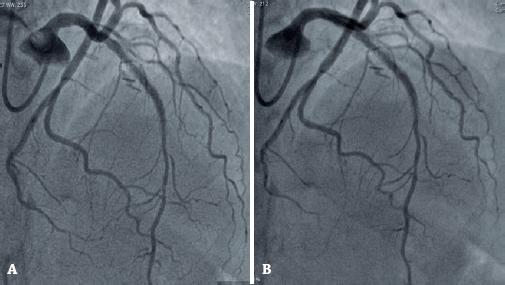
The widespread use of bare metal stents as from 1995 led to the appearance of a new entity called in-stent restenosis, and the severe concomitant calcification of the vessels is a challenge for the interventional cardiologist. In this scenario, rotational atherectomy has rised as a therapeutic rescue approach to manage this situation, using trephines to eliminate the underexpanded and non-expandable coronary stents. However, comprehensive data on the long-term efficacy or results of the procedures have not been published yet. We report a case of rotational atherectomy in stent restenosis, followed by percutaneous coronary intervention with implantation of a new stent to treat a calcified in-stent lesion.
611